Friday, December 31, 2010

(CNN) -- "Viral" leads this year's list of "banished words" from a Michigan university seeking an antidote to over-used expressions.

The word -- often used to describe popular one-hit wonders on YouTube -- garnered numerous nominations for the annual list, released by Lake Superior State University on Friday.

"This linguistic disease of a term must be quarantined," wrote Kuahmel Allah of Los Angeles wrote in nominating "viral" on the university's website.

The university says it receives more than 1,000 submissions each year on its website for the playful list, which a public relations official created in 1976 to draw more attention to the school.

"Viral" wasn't the only digital-age term in the cross-hairs of linguistic sticklers this year. "Fail" and "BFF" made the 2011 list, which also included a proposal to ban using Facebook and Google as verbs.

Political expressions that popped up during intense mid-term elections also took a hit. The list included the often-used campaign phrase "the American people" and "Mama Grizzlies," a term Sarah Palin coined to refer to women with similar political views.

Past nominations for the "List of Word's Banished from the Queen's English for Mis-use, Over-use and General Uselessness" have included "sexting," "staycation" and "carbon footprint."
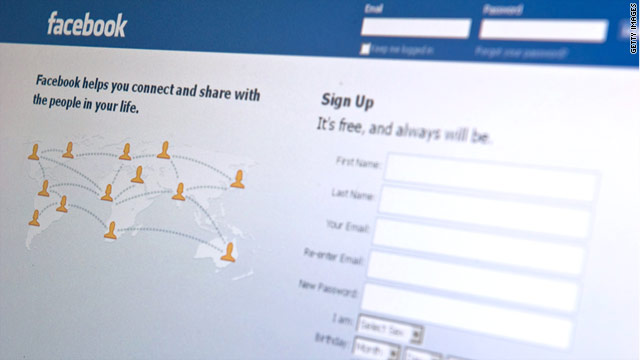
(CNN) -- Facebook beat out Google as the No. 1 most-visited site in the United States in 2010, according to Internet analytics firm Hitwise.

How was Facebook able to outplay the former Web champion? And can Google make a comeback in 2011 and beyond?

Let's begin by admitting that the Hitwise data doesn't represent the whole truth. For starters, Hitwise only measures unique visitors in the United States. What's more, Hitwise measures sites on a per domain basis: If the analytics firm were to include Google-owned YouTube in its calculations, Google's network of websites would outrank Facebook properties.

Nonetheless, there's a tectonic shift at work here: Facebook, once easily dismissed as the next social networking fad, has seemingly discovered Google's weak spots.

What are they, and can Google regain ground here?

Identity Wars

The first area in which Facebook has bested Google is online identity. Remember the days when trying out a new website required entering your name, username, password and other details into a form? Now sites can opt to use your Facebook account for one-click signup, making life easier for both websites and their users.

Facebook was able to make this move because the service was founded around the principle of real names. While this may have slowed Facebook's growth in its early days, the company now owns a massive database of more than 500 million identities, most of them real.

As a result, Facebook is becoming the de facto identity system for the Web. The social optimization service Gigya claims that Facebook accounts for 46% of website logins versus Google's 17%.


(Reuters) - Most Asian stock markets looked set on Friday to end the year with solid gains and further advances are expected in 2011, but worries about the sluggish U.S. economy and Europe's festering debt crisis will likely keep investors on edge well into the new year.

While data shows a U.S. economic recovery is finally gaining some traction, unemployment remains stubbornly high and there are no signs that the Federal Reserve will begin to reverse its super-loose monetary policy any time soon.

The Fed's moves to shore up the economy this year and record low interest rates in the West have unleashed a flood of cheap money into riskier assets as investors seek higher returns, a trend that is likely to continue in the coming year.

Those inflows have largely targeted faster-growing emerging markets such as those in Asia, boosting share prices and hobbling the U.S. dollar, while spurring prices for oil, gold and other commodities to multi-year or record highs.

"Europe will definitely be a big focus and I wouldn't be surprised to see a European country default in 2011," a trader at a U.S. investment bank said.

"I think the U.S. economy will also show more convincing signs of recovery next year, so I'd be looking to buy U.S. dollars, maybe after March. The first quarter will probably see a strong rally in equities, so it'll be a risk-on environment."

The MSCI index of Asian stocks excluding Japan inched up on Friday in thin trade, with many of the region's markets already closed ahead of the New Year holiday.

A strike is taking place across Pakistan to protest against possible changes to the blasphemy laws.

No public transport was reported in Karachi, where demonstrators blocked traffic as part of the industrial action called by religious parties.

The government has distanced itself from a bill to change the law, which carries a mandatory death sentence for anyone who insults Islam.

Rights groups say the law is often used to persecute religious minorities.

Traffic was thin in Karachi, and there were reports of businesses shut in parts of Sindh and Punjab provinces, says the BBC's Ilyas Khan in Islamabad.

There were also reports of a transport strike in Quetta, the capital of the southern province of Balochistan.

(CareerBuilder.com) -- Attending graduate school is a big decision -- there's a lot of time, effort and money involved in earning an advanced degree. Yet despite the major commitment, the popularity of graduate degrees is on the rise.

According to the annual Survey of Graduate Enrollment and Degrees conducted by the Council of Graduate Schools, the number of applications to grad school has increased by an average of 4.8 percent per year between 1999 and 2009, and shot up 8.3 percent between 2008 and 2009 alone.

Though the CGS study reported that the number of graduates from advanced degree programs increased across almost all disciplines last year, it seems some programs hold a stronger appeal than others.

The study found a combined 51 percent of the total number of master's degrees awarded in 2009 were in either business or education. By contrast, 7.2 percent of master's degrees were granted in engineering, 8.6 percent were in health sciences and 4.1 percent were in either mathematics or computer science.

While the large number of master's degree earners in business and education is definitely a testament to the popularity of those professions -- it doesn't necessarily attest to the growth of these particular industries and vice versa.

CareerBuilder.com: What your pet says about your career

Despite the fact that only 4 percent of master's degrees were awarded in math or computer science in 2009, for example, many of today's fastest growing professions are in these disciplines.